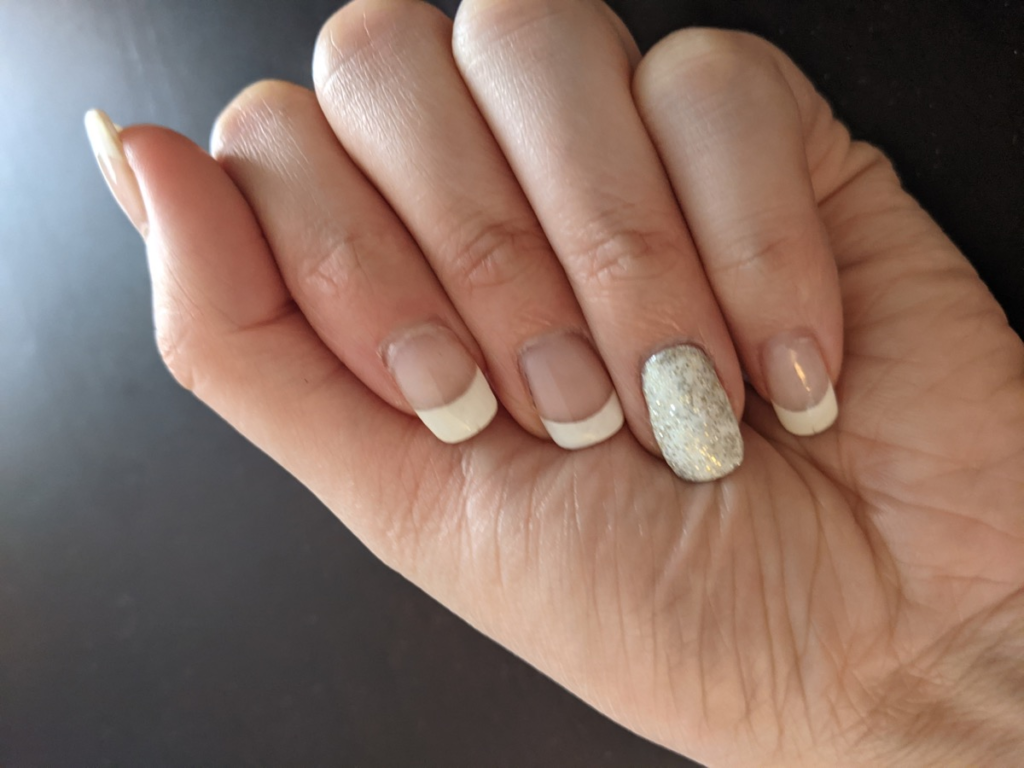

Anyone who has ever grown out their nails knows where things can go wrong. The slight snag followed by a peel at the tip, a split halfway down the nail – weeks of patience are lost in the blink of an eye. For people with weak or peeling nails, polish alone is not enough, but acrylics and extensions can seem like overkill. BIAB fills this niche, providing just the boost people with brittle nails need, while maintaining a tidy appearance.
BIAB stands for “builder in a bottle” and has become one of the most requested treatments for people looking to strengthen natural nails without building significant length. This guide explains what it is, how it compares to other nail services and how it should be cared for.
BIAB Explained
BIAB is a heavy, self levelling gel which acts as a protective overlay for the natural nail. It is called builder because it is similar in properties to builder gel, the product used to sculpt structure onto extensions but is presented in a bottle with a brush for ease of application. It was popularised in the UK by one brand who own the name, but now BIAB is used to describe a wider technique.
The main difference is the flexibility of the product. It has been designed to work with the nail, allowing slight movement, rather than sitting rigidly on top. Having been cured under an LED lamp, BIAB provides a smooth layer of gloss which can be worn alone in a clear or tinted shade or with gel polish added.
BIAB Compared to Other Services
It can be helpful to understand how this service compares to the other options.
Regular polish is light, adding only aesthetic benefits to the nail, while acrylic and hard gel are much heavier. BIAB is in between and can usually be worn with minimal build on the natural nail, providing additional strengthening without adding significant length.
BIAB is a popular treatment for anyone with weak, brittle or splitting nails, and those peeling during the growth process. It is suitable for those who type a lot or work with their hands, and who find that traditional polish does not last beyond a few days. It can be worn in a clear shade, making it a good option for people who prefer their nails to look clean and natural, as it does not require intricate designs.
It should also be noted that BIAB does not repair the condition of the nail, as it is not possible to repair dead cells such as those which make up the nail plate. However, it does provide a protective layer which will allow the natural nail to grow out healthily.
What Happens during an Appointment?
The consultation is usually brief, as there is little choice in the finish (clear or tinted shade) and the process is not particularly invasive. The technician will prepare the nail, filing the cuticles and buffing the surface to allow the product to adhere. A base coat is applied followed by the builder gel. A small amount of product is placed on the nail starting from the middle and worked out towards the cuticle and the free edge. The product is shaped so that the nail has a slight curve with an area of raised material (the apex) where the nail requires additional strength. The nail is cured under the lamp and filed to achieve a perfect shape.
If you are looking for a BIAB Manicure in London, it is crucial to note that while the treatment is widely offered, the skill level varies greatly. An even overlay with a fine edge along the cutting line is a sign of a good finish, while thick and uneven layers and product touching the sides are a sign of an inexperienced technician. First time appointments can take up to 90 minutes depending on the finish and any designs or colours.
How Long Can It Be Worn For?
Most people are able to leave the overlay in place for three to four weeks before an appointment to refresh it. As the natural nail grows, a gap will appear at the cuticle and the overlay will begin to lift unevenly. Most technicians offer an infill, which involves buffing the existing overlay down and adding a fresh layer to cover the new growth. This is quicker than a full set and allows the overlay to be worn for a number of months as the nail grows out underneath.
The exact wearing time will vary depending on lifestyle, as those who frequently get their hands wet, work with cleaning products, or experience knocks and bangers may find the product does not last as long.
Aftercare Which Makes a Difference
There are a few small steps which make a big difference to the longevity and condition of the overlay.
Using cuticle oil on a daily basis to keep the cuticles hydrated is important, as they support the nail plate and prevent lifting. Wearing gloves while washing up and doing household chores prevents the overlay from being weakened by hot water and detergents. Using the nails as tools should be avoided and the fingertips used instead when opening tins or removing labels. It should never be necessary to remove a piece of lifting gel and if this happens, it will likely pull away a layer of the natural nail with it. It is also important to book infills promptly to prevent the overlay from becoming uneven.
Removal Matters
Depending on the brand, BIAB can either be soaked off or filed down by a technician. The product should always be removed carefully, without forcing it. Peeling gel at home is one of the biggest causes of thin, sore nails following a gel service and the product is often incorrectly blamed.
Some people like to maintain a break between sets allowing the nails to breathe. This is a good time to maintain the nails with a simple conditioning treatment. Others prefer to keep the overlay on with regular infills throughout the year and both are perfectly acceptable as long as the nails are not sore.
Possible Drawbacks
While BIAB has many benefits, it is not a suitable option for everyone. The product contains acrylate ingredients which some people find that they are allergic to. Allergic contact dermatitis is the result of sensitivity to certain substances and this can often occur around the nail area after having a product containing acrylates. If this happens, it is important to stop the treatment and contact a professional or doctor for advice. Technicians who are careful not to get product on the cuticle reduce the risks substantially.
It is also a more expensive and time consuming option than a simple polish change and needs to be maintained with regular infills. It may not be the best option for those who want to change colour frequently.
Choosing a Good Technician
The final choice will be based on the skill level of the technician and there are some factors which should be considered.
A good place will take time to discuss options and have a look at the nails first. Tools should be sterilised for single use and the packaging should be opened in front of the client so they know what products are being used. Good technicians will also explain how to remove the product at the end of the appointment and will happily show work from previous clients to demonstrate the quality of their BIAB work.
Final Thoughts
BIAB has become a popular treatment for those looking to strengthen natural nails with minimal disruption to their appearance. It is best seen as a protection option, rather than a repairing treatment, and its success depends on a balance of preparation, application, aftercare and removal. Take your time finding a qualified Nails Salon where the technicians are happy to answer questions and who care about the health of the natural nail.